From Opening Bell to Main Event, Wrestle Kingdom 20 Was All About The Young Lions
Breaking Down the use of the Young Lion as a theme throughout New Japan Pro Wrestling's biggest show in years.

When I first subscribed to NJPW World, the streaming service of New Japan Pro Wrestling, it was early 2018. After a few years of paying distant attention to what was happening in New Japan (“Ooh, that Shinsuke Nakamura guy is cool...oh shit, he's coming to WWE!”), Wrestle Kingdom 12 and its Chris Jericho vs. Kenny Omega semi-main event finally hooked me in to the promotion full-time. Back then, an NJPW World subscription was 999 yen, which came out to roughly $9.99/mo, depending on where the exchange rate was. Today, before starting to write this post, I checked my bank statement. NJPW World has since bumped up the monthly fee to 1299 yen, which currently equals $8.22. The price went up, but I'm paying less in dollars. I bring up this quick lesson in global currency exchanges to illustrate the greater challenges New Japan Pro Wrestling has faced as a competitor in the global pro wrestling marketplace, especially as it continues its efforts to expand into the United States.
The yen's value has dropped significantly in the last 8 years; meanwhile, the rise of All Elite Wrestling in that timeframe has introduced a new competitor for global wrestling talent. AEW's target market is a hardcore wrestling fan with a sharp awareness of the larger global pro wrestling scene, and its CEO and principal owner, billionaire Tony Khan, happens to share that enthusiasm, as well as an enthusiasm for writing checks. Throw this all in a blender, and you end up with a mass talent exodus to America. The list of top talent New Japan has lost to AEW (and to a lesser extent, WWE) has been staggering: Kazuchika Okada, Jay White, Will Ospreay, Kota Ibushi, Juice Robinson, Katsuyori Shibata, Kevin Knight to AEW for various reasons (it would be reductive to say that it's all about the money for every one of these talents, but certainly it's part of the calculus); Jeff Cobb/JC Mateo, Tama Tonga, Tanga Loa, Bronson Reed, and Hikuleo/Talla Tonga (and maybe EVIL?) to WWE. That's a LOT of bodies lost, and that's after the initial launch of AEW swept away Kenny Omega, the Young Bucks, and a slew of Ring of Honor talent that did Japanese tours as well. Right now, New Japan has about as many believable stars as the International Star Registry. Attendance and business have struggled since Covid; stuff like Okada heading to America without putting over an heir apparent certainly hasn't helped. And sure, thanks to the working relationship New Japan has with AEW and CMLL, a lot of those names are sure to pop up in New Japan from time to time. But those wrestlers aren't working the small towns, the tours, the multi-man tag matches. They're a rare attraction now, and New Japan needs new draws, whether built through their dojo system, or signed from elsewhere.
On January 4, 2026, New Japan presented the 20th annual Wrestle Kingdom at the Tokyo Dome, a show that presented a unique opportunity: Hiroshi Tanahashi's retirement match sold out the Dome for the first time in the history of the Wrestle Kingdom name. Nearly 47,000 people would be on hand, nearly twice the attendance of the previous year. Plus, the IWGP World Heavyweight Championship was to be defended by Konosoke Takeshita—a product of the smaller DDT Pro Wrestling promotion who has become a top name in AEW. Plenty of new eyes would likely be drawn to the product as Takeshita, a New Japan outsider, would defend the title against the homegrown Yota Tsuji. It was an opportunity to tell the story of New Japan inside its own ring, re-establish its roots, and look ahead to a (hopefully) brighter future, hopefully while hooking some new or lapsed fans. And when you're talking about the essence of New Japan tradition, you've gotta talk about the Young Lions.
The dojo system. Building from within has been the bread and butter of New Japan for decades. Nearly all the big names you've heard come out of New Japan over the years have come up through their training centers – Tanahashi, Okada, Chono, Hashimoto, Muto, all the way through the Bullet Club's War Dogs, who trained in the LA Dojo under Shibata. You know a Young Lion when you see them – all New Japan's students wear plain black trunks with short haircuts. They are taught to adhere to a basic move set, a “walk before you run” sort of scenario. They're taught to focus on one submission move: the Boston Crab. Once they have learned all they can in the dojo, the Young Lion departs on an “excursion” to a partner promotion (often CMLL in Mexico, RevPro in Britain, or Ring of Honor back before it got bought by Tony Khan). During excursion the Young Lion is mentored by others on their new roster; they learn new moves, and they develop their personality, their “gimmick,” their identity.
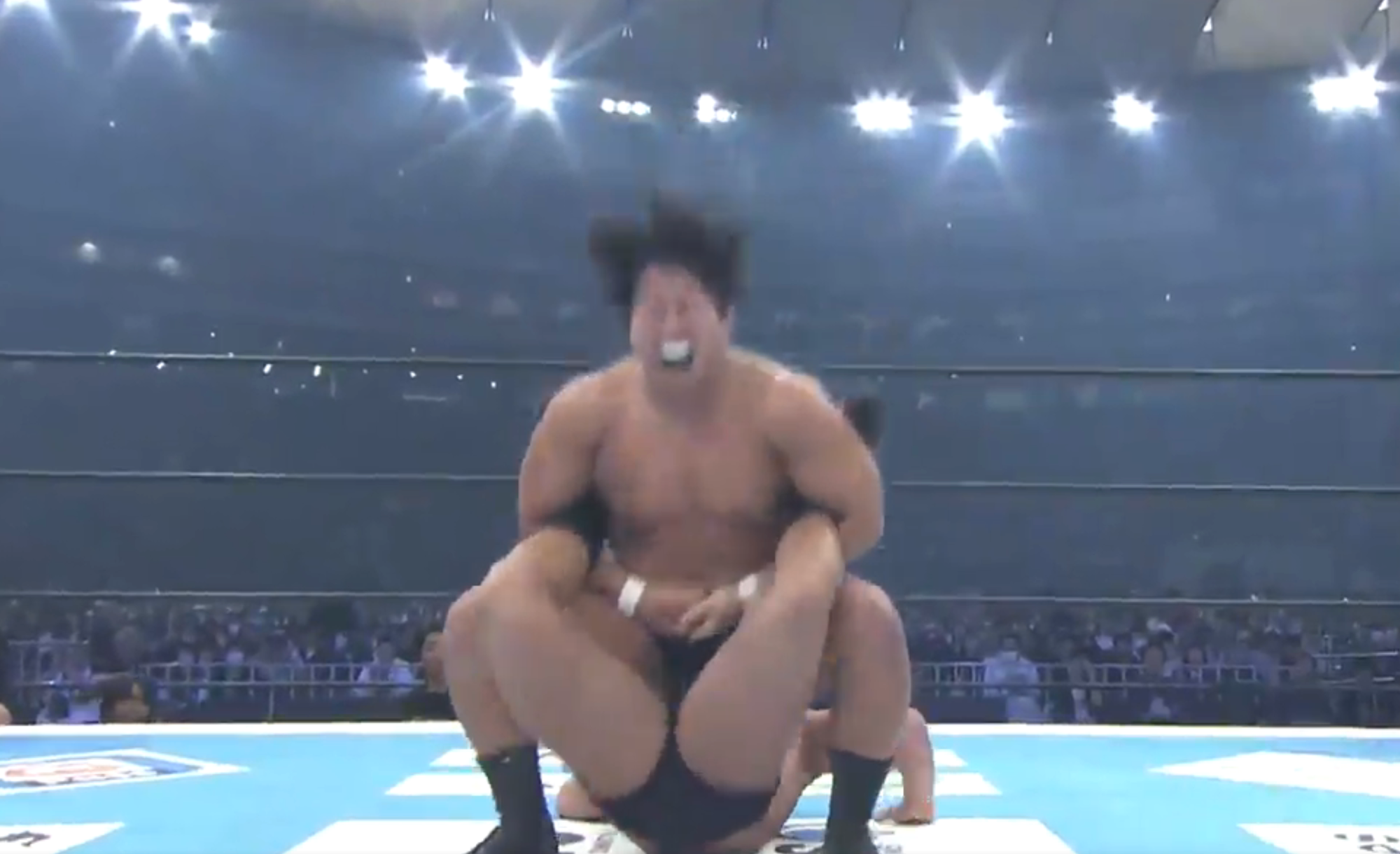
Wrestle Kingdom 20 was all about the Young Lions, from opening bell to World Title match. The day began with a Young Lions tag team match – a late “bonus” addition to the card, according to commentators Walker Stewart and Chris Charlton. Katsuya Murashima and Masatora Yasuda defeated Shoma Kato and Tatsuya Matsumoto via submission after a Boston Crab. This set the table for the rest of the show – if you were a new fan watching New Japan for the first time, you were introduced to the concept of the Young Lion. If you were a long time fan, it served as a reminder. The Boston Crab is the Young Lion finisher. That's foreshadowing, y'all.
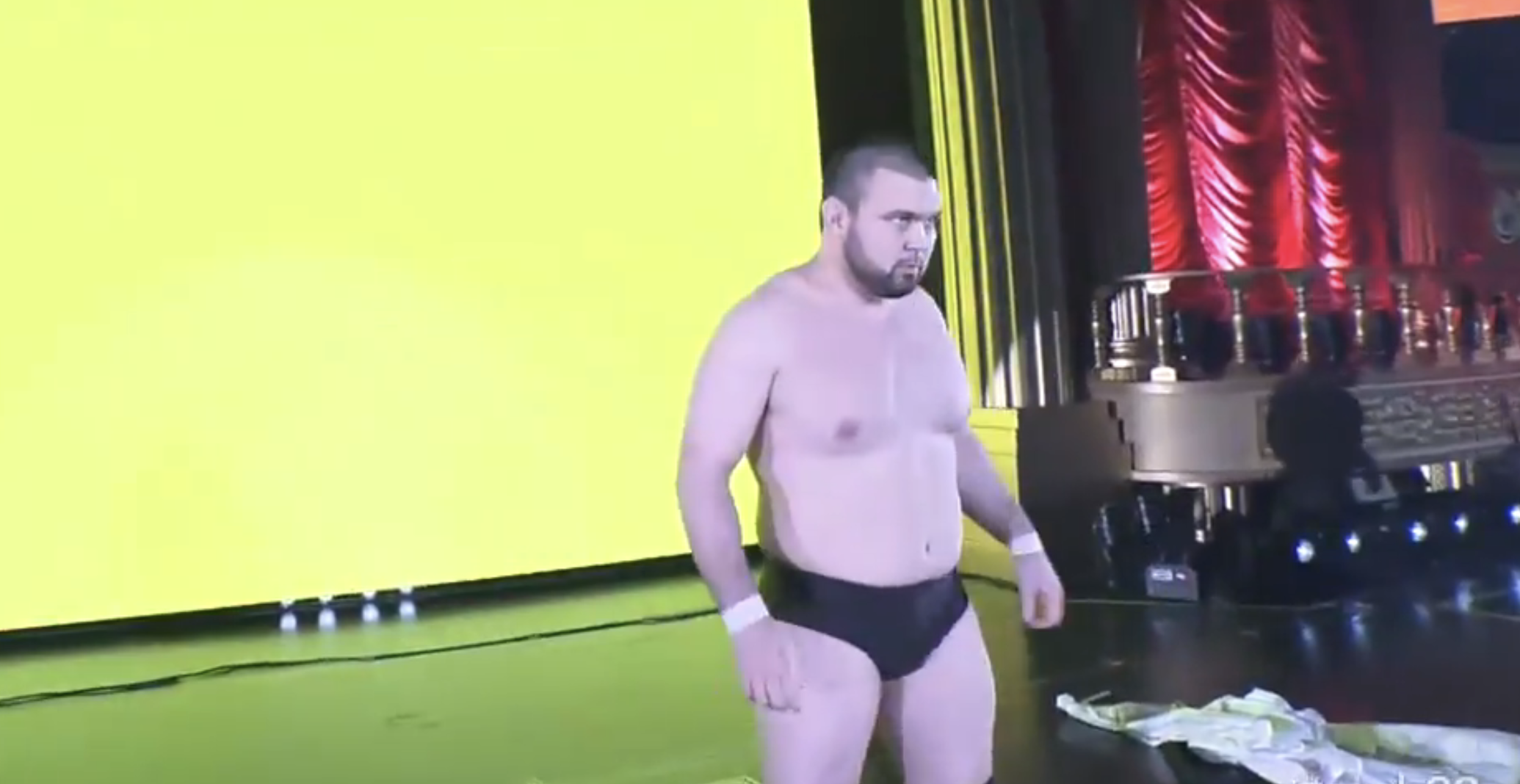
One of the feature matches later in the evening saw Olympic gold medalist Aaron Wolf, who took top honors in judo in the 2020 Tokyo games, make his debut by defeating EVIL for the NEVER Openweight Championship. Wolf, by virtue of his status as a Japanese Olympic champion, skipped the line, as it were, training in the dojo but wrestling for an NJPW title in his first match as a pro. EVIL made light of this during the build, mocking Wolf for thinking he could step up to the NEVER Champ in his debut. During one encounter, EVIL claimed that after he beat Wolf, he'd force the former judoka to shave his head and don the black trunks of a Young Lion and start from the bottom up, like he should have in the first place. In response, Wolf made his WK entrance in his traditional judo gi, head shaved. He then stripped down to a pair of basic black Young Lion trunks and black boots to the roar of the WK crowd's approval. Everyone in the crowd knew that Aaron Wolf was a huge signing for New Japan, and that he was being hyped as one of the next big names in the company, but with this gesture, Wolf displayed that he understood the treatment he was getting, and showed respect to the traditions of his new employer. If there's one thing the New Japan fans love, it's people showing respect to their traditions. (Juice Robinson famously left NXT, feeling unfulfilled, and started from scratch in the New Japan dojo, working his way from the bottom up, a decision that earned him immediate love from the Japanese fans.) In overcoming the standard dogshit House of Torture shenanigans and defeating EVIL with a triangle-style judo stretch, Wolf actually managed to make an EVIL match entertaining. Way to pass your first big test, Lion Wolf, and congrats on your new championship! (As of the January 20th Road to the New Beginning show, Aaron's still rocking the Young Lion gear.)
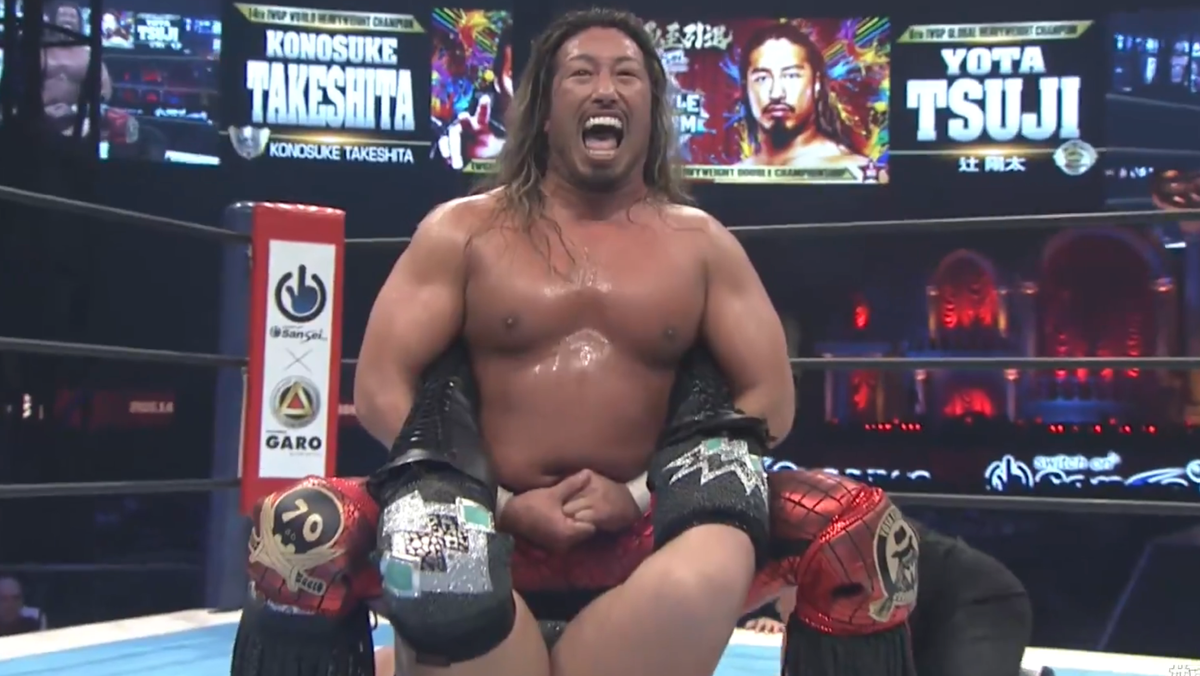
This was all table setting for the main course, though – IWGP Global Champion Yota Tsuji vs. World Heavyweight Champion Konosuke Takeshita, title vs. title, in the semi-main event.
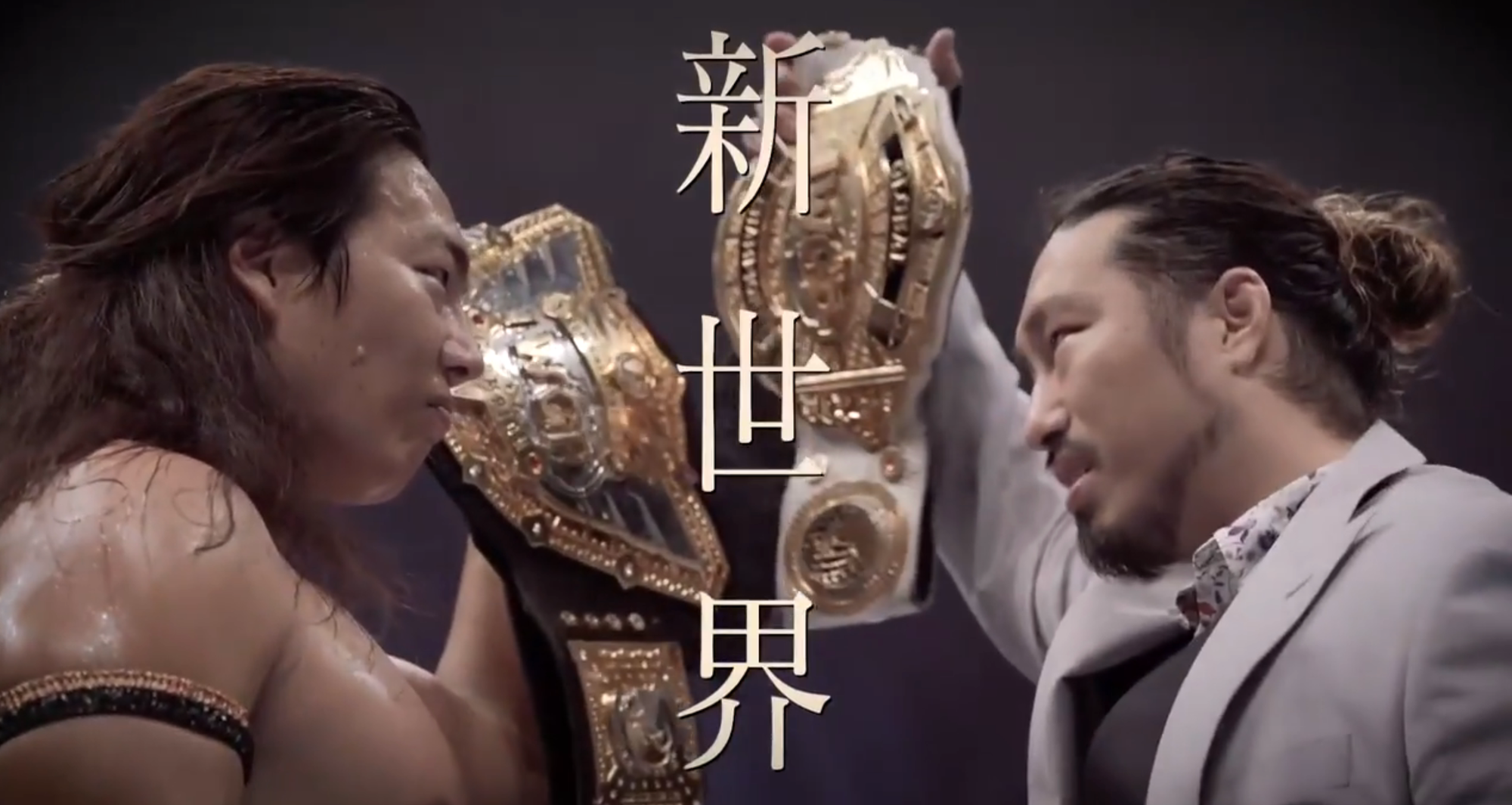
The World Title match was full of tradition, symbolism, and story. Takeshita, the controversial reigning champ, won the title in October from Zack Sabre, Jr. after winning the annual G1 Climax. There was nothing controversial about the win, which was clean as a whistle; the fans got a little grumpy because once again, the World belt was held by an AEW contracted wrestler, a little over a year after Jon Moxley had his title run. Never mind that Takeshita also has a contract with New Japan; to the fan base, he's an outsider, and New Japan fans have never been thrilled with outsiders holding the top title. (I'm convinced that this ties all the way back to the origins of puroresu, when Japanese babyfaces routinely vanquished evil American foreigners, but that's just outsider speculation.) Tsuji, meanwhile, is one of the current group of home grown new generation “musketeers” (along with Shota Umino and Ren Narita) expected to carry New Japan into a new era. Tsuji came into this match as the IWGP Global champ, but the question was whether New Japan was ready to pull the trigger on one of the musketeers as the face of the company, as New Japan's present?
The match was filled with nods to Takeshita's and Tsuji's mentors and their upbringing in pro wrestling. Takeshita developed into the global powerhouse he is now while wrestling in DDT, a Japanese indie known for some of the most absurd comedy wrestling in the world. Those viral videos of wrestling pandas and blow-up dolls mask the fact that people in DDT also learn to work, and Takeshita is living, flying proof. One of his mentors in DDT was Kenny Omega, who established himself in that company before moving on to New Japan. Sure enough, during the half hour World Title match, Takeshita broke out Kenny's signature dive, flipping upside down over the top rope and crashing onto Tsuji as Chris Charlton announced “Terminator's gonna rise!” Kenny, by the way, also defended New Japan's top prize in the Wrestle Kingdom 13 main event in a match that carried very similar themes, as he also defended his car crash spot-heavy modern wrestling style against Hiroshi Tanahashi's vision of traditional Japanese Strong Style. Kenny, of course, lost, on his way out the door to AEW.
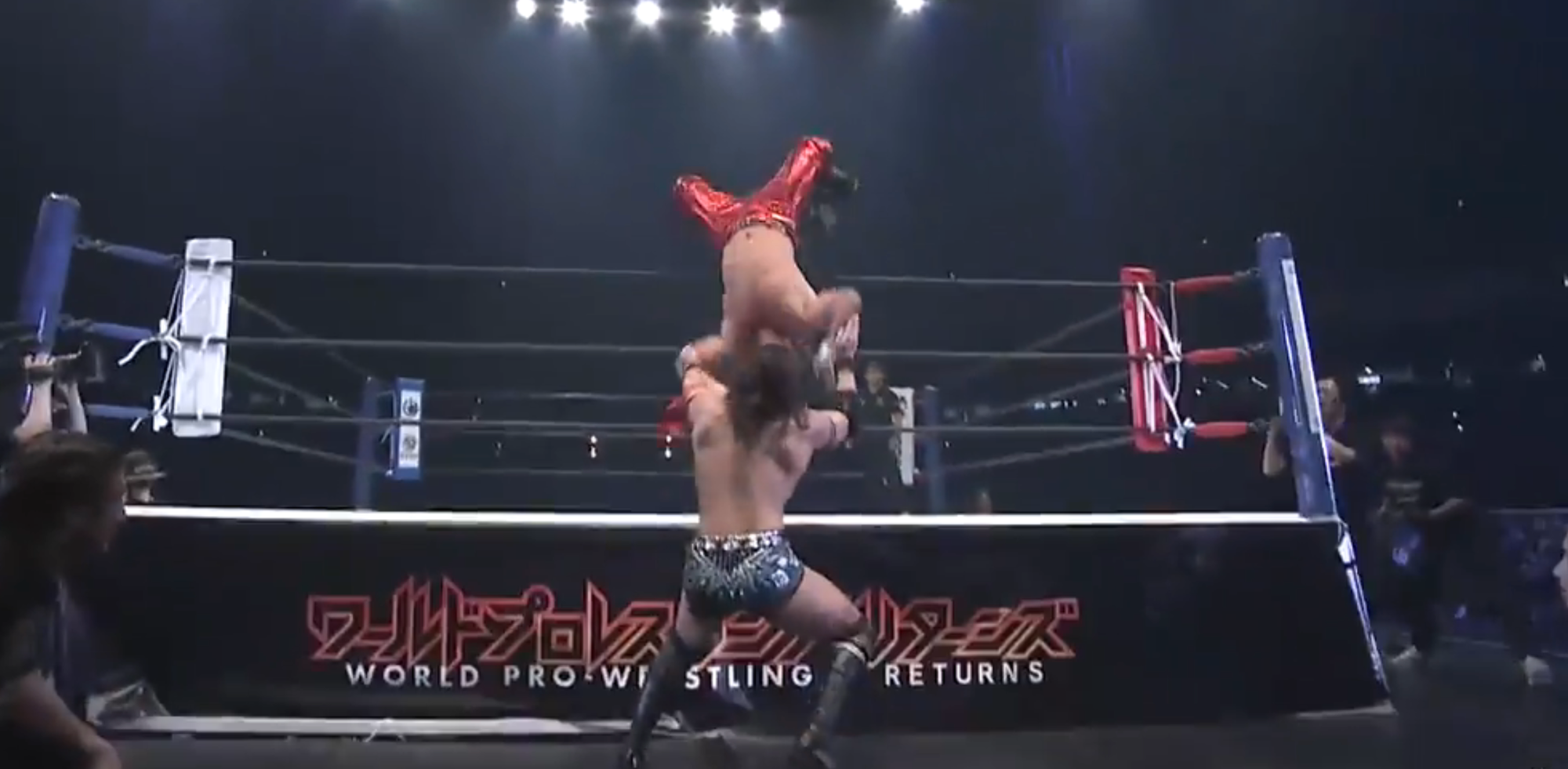
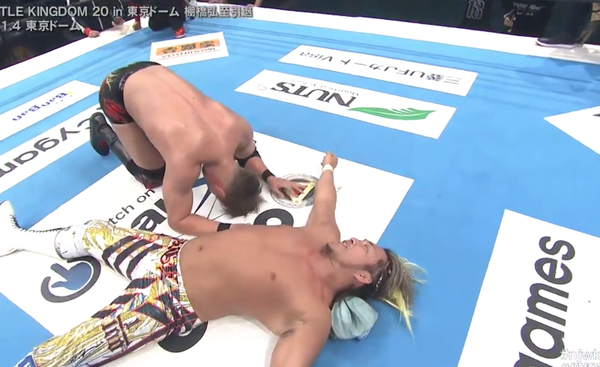
Meanwhile, Tsuji also paid homage to the people who influenced him on excursion, hitting Takeshita with an alley-oop reverse faceplant onto the mat from a power bomb position. Charlton notes that he hasn't seen him do that since RevPro. Earlier in the match, Tsuji matched Takeshita's dive with a Fosbury Flop taught to him by RevPro's Gideon Grey. Near the climax of the match, Tsuji goes up top and lands the Guerrero Special—a reverse suplex from the top rope, which he picked up from Ultimo Guerrero in CMLL. But finally, in the end, Tsuji wins the IWGP World Heavyweight Championship by locking Takeshita in that most humble of Young Lion holds—the Boston Crab. It's a moment soaked in meaning, as the future of New Japan reaches back to his days in the dojo to become New Japan's now. The meaning's not lost on the fans, either, who erupt with joy as Takeshita taps out and the bell rings.
And the symbolism doesn't stop with the match! During the traditional post-match promo from the winner, Tsuji is jumped by another New Japan outsider – the shifty Jake Lee, a recent addition to the United Empire faction who cut his teeth in All Japan Pro-Wrestling and Pro Wrestling NOAH. Another guy who skipped the Young Lion system, calling his shot by interrupting yet another New Japan tradition. Boo this man! Booooooooo!
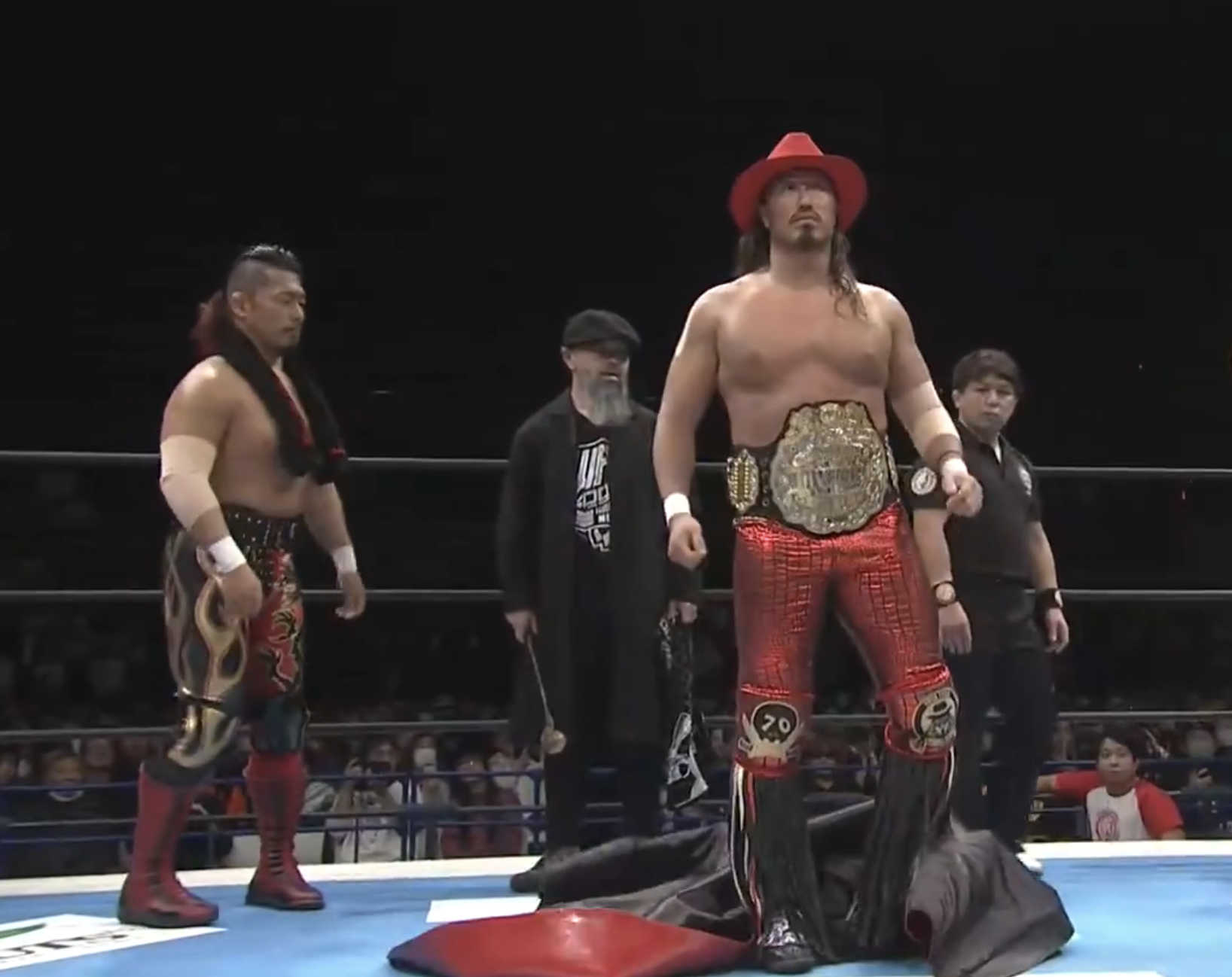
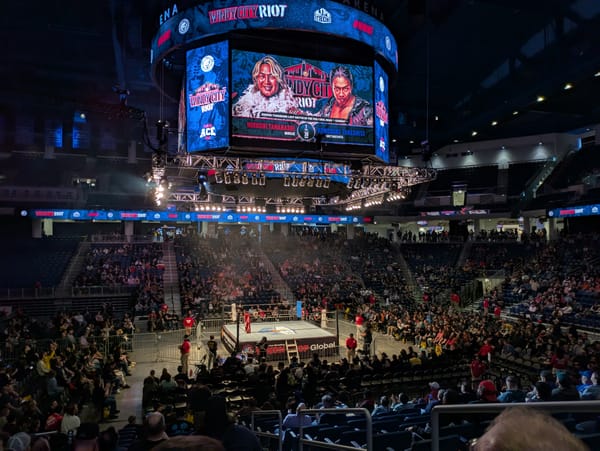
That feud is in the process of playing out right now, as Tsuji works the towns and the tours that Takeshita didn't. And the belt Tsuji carries with him? He ditched the butterfly-shaped IWGP World Heavyweight Title belt that was introduced in 2021, when the IWGP Heavyweight title, a championship dating back to 1987, was merged with the IWGP Intercontinental title and retired. Instead, when Tsuji came through the curtain at the January 5 New Year Dash! (the equivalent to the Monday Night RAW after WrestleMania), he was carrying the IWGP Heavyweight Title that Okada, Tanahashi, Omega, and others held up until March 2021. The top man in New Japan is once again called the IWGP Heavyweight Champion. No “World” in that name anymore. More evidence that New Japan is refocusing on its own history rather than global expansion? Perhaps. Perhaps, with Tanahashi retiring and a new champion crowned at WK20, New Japan seeks to reset, focus on what's made it great in the past, and build once again from within. On the other hand, a number of American shows were announced during the Wrestle Kingdom program, including night one of the G1 Climax Tournament happening in July in Chicago. The IWGP Heavyweight Champion, no matter who it is, will be there, leading one of New Japan's greatest traditions into another year, in front of a rabid American crowd, but a crowd that will have as much respect for the history of New Japan as any. Heck, who knows...maybe a few future Young Lions will be in the crowd as well. Juice Robinson's from the area, after all.